
Foundry Sand
Foundry sand is the core material for making moulds and cores in the casting of iron, steel and non-ferrous metals. To withstand the high temperature of molten metal, it needs high refractoriness, dimensional stability and a controlled grain distribution. For this reason, casting uses high-SiO₂, low-clay silica sand; fractions in the 50–70 AFS range are typically preferred.
How to Choose Foundry Sand
A few key criteria determine the right foundry sand. AFS fineness sets the balance between casting-surface quality and the mould's gas permeability: fine sand gives a smoother surface but makes gas evacuation harder, while coarse sand releases gas easily but roughens the surface; 50–70 AFS achieves this balance. SiO₂ content relates directly to refractoriness; a high silicon dioxide content allows the sand to protect the mould without deforming at metal temperature or sticking to the metal. A low clay content lets binders such as resin or bentonite work in a controlled way and reduces gas defects during casting. The sand also needs to be dry; moisture can vaporise during pouring and cause gas-void defects.
Recommended Fractions for Casting
For general mould and core applications, 50–55 AFS (0.1–0.5 mm) and 60–70 AFS (0.1–0.3 mm) fractions are used. For precision castings that require a smoother surface, 80–100 AFS may be preferred. We can determine the right fraction for your application together.
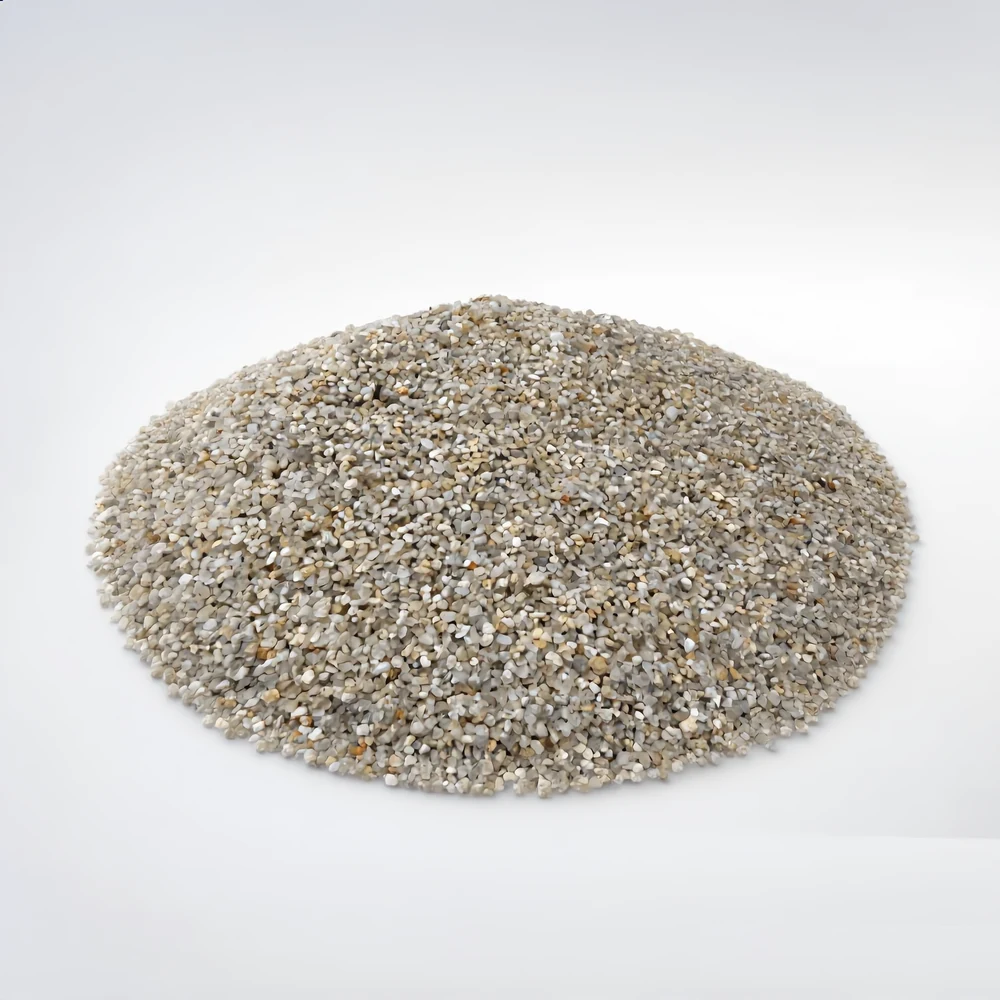
About Foundry Sand
What AFS should foundry sand be?
Most casting applications use the 50–70 AFS range. For precision castings that require a smoother surface, finer (higher AFS) fractions may be preferred.
Why does the SiO₂ content matter in foundry sand?
A high SiO₂ content increases the sand's refractoriness, so the sand does not deform at the temperature of the molten metal and does not stick to it, keeping the casting surface clean.
Are core sand and mould sand the same material?
Both are based on the same silica sand; the difference usually comes down to the fraction and binder system used. The same sand can be used for both purposes in different fractions.
Does foundry sand need to be dry?
Yes, foundry sand is generally used dry. Because moisture can cause gas defects during casting, moisture values close to 0% are preferred.
Get a quote for Foundry Sand
Tell us what you need; we will get back to you quickly with the right product, grain size and shipping.